
Friday the 13th: between superstition, history and little beliefs, should we really be wary of our luck?
This Friday, 13 November 2026, some will look at their calendar with amusement, others with a slight sense of unease. For some, it's a day like any other. For others, it's best to avoid taking risks, walking under a ladder or crossing paths with a black cat! But where does this reputation of Friday the 13th, so often associated with bad luck, really come from?
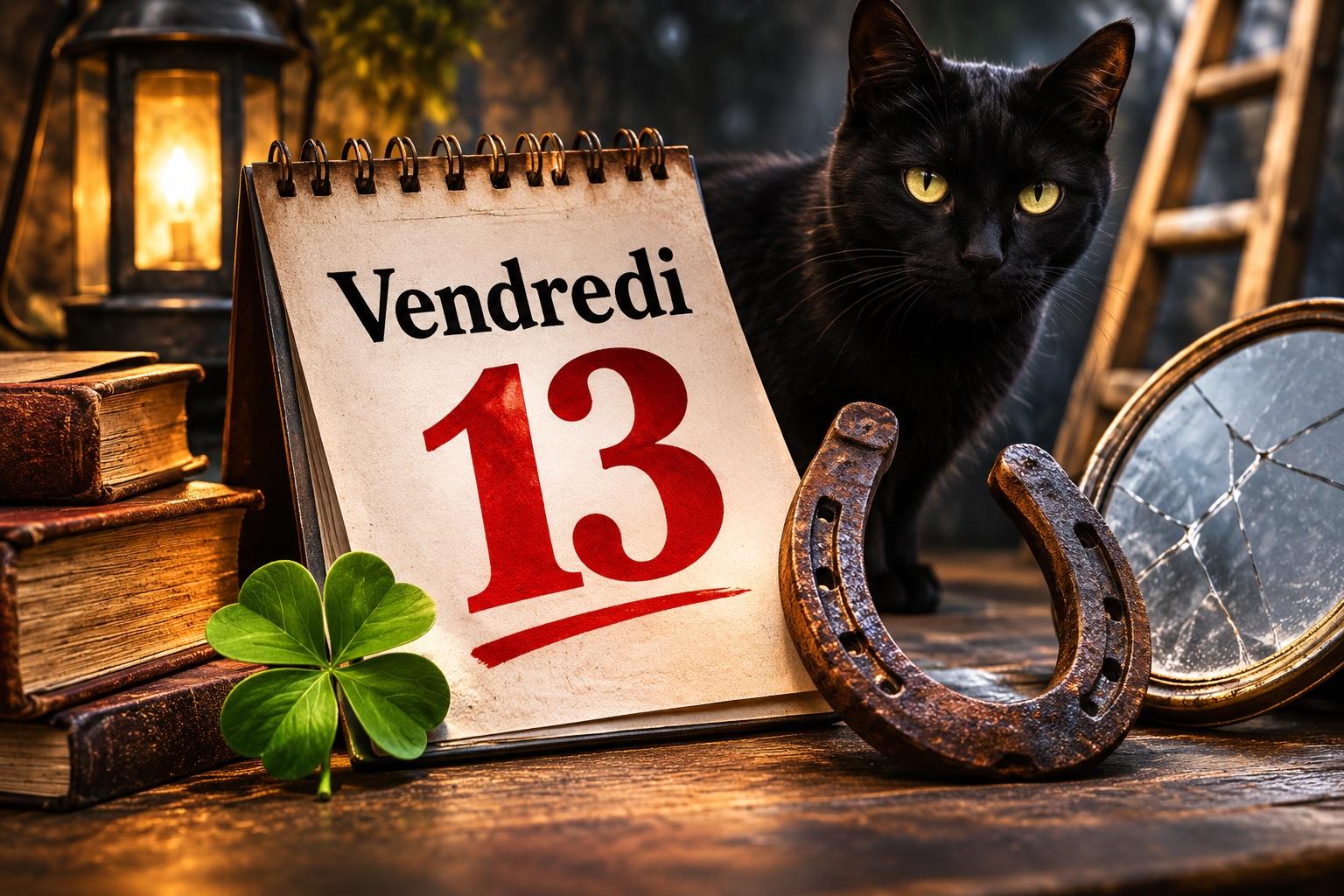
This Friday, 13 November, some will see it as a day like any other, while others will prefer to play it safe. But why has this date been associated with bad luck for so long?
This superstition has its origins in several traditions. In Christian culture, the number 13 recalls in particular the thirteen guests at the Last Supper, while Friday is associated with the crucifixion of Christ. Over the centuries, these two symbols helped to establish the reputation of Friday the 13th.
In Germany, as in France and Luxembourg, this belief remains well known. Our German neighbours speak of ‘Freitag, der 13’. Other countries have their own superstitions: in Spain, it is Tuesday the 13th that causes concern, while in Italy, the number 17 is often considered unlucky.
In the villages of the Three Borders area, these little beliefs are also part of the stories handed down from one generation to the next: avoiding walking under a ladder, being wary of a black cat or touching wood to ward off bad luck.
Yet there is no scientific evidence that Friday the 13th is actually more dangerous than any other day. After all, luck may depend more on how we view events than on the date written on the calendar.
And what about you – are you superstitious? Does Friday the 13th bring you luck, or do you prefer to play it safe?
The Radio Tripoint editorial team – The cross-border radio station.
Read also
The whole section News

NewsSierck-Les-Bains
In the vineyards, winter work is already paving the way for the next grape harvest
1 min read