
“Naturdenkmal”: when a tree becomes a monument.
Have you ever walked past this sign without knowing what it means?
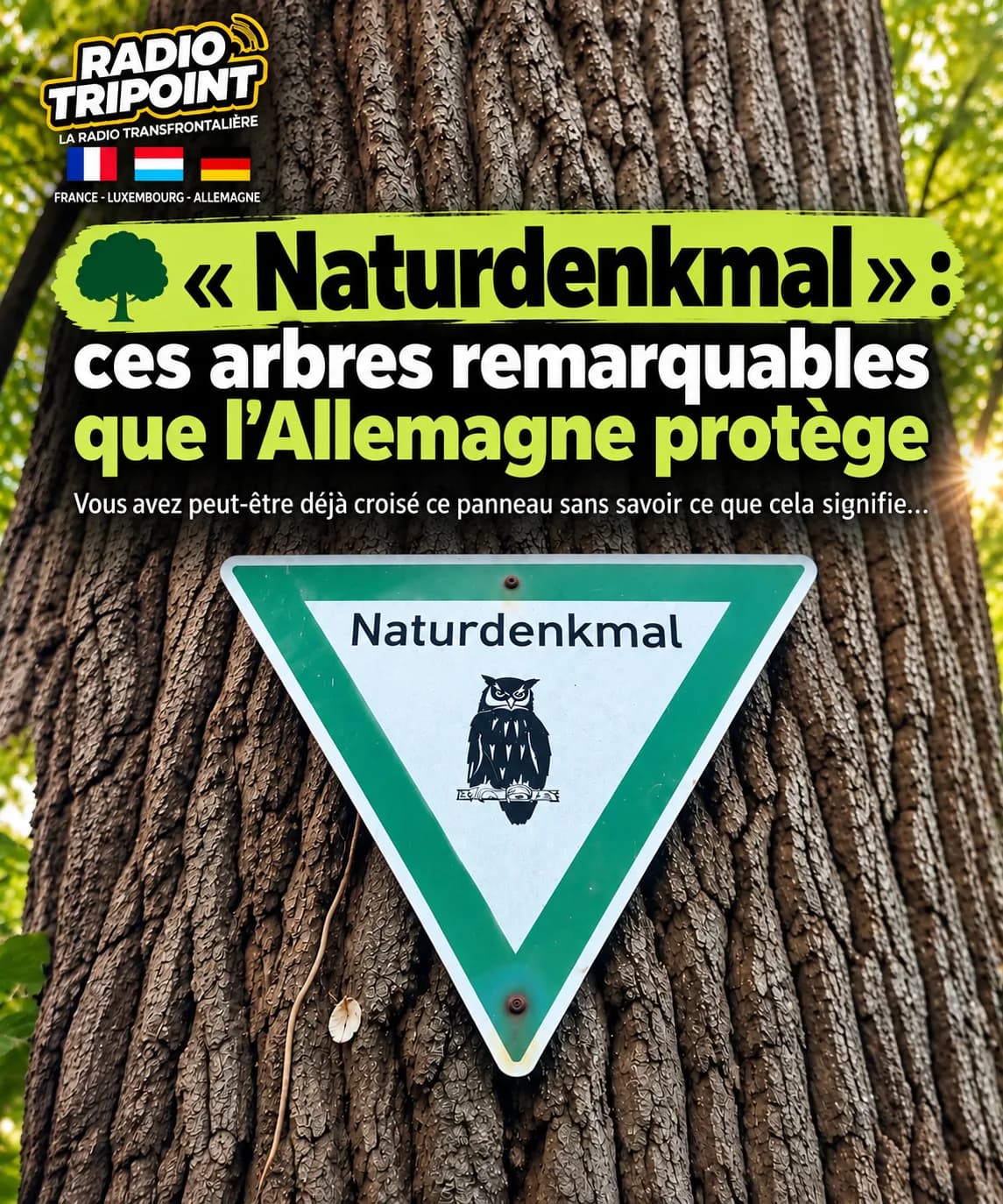
Have you ever walked past this sign without knowing what it means?
On certain remarkable trees in Germany, a green and white triangular sign reading “Naturdenkmal” shows that the tree enjoys special status.
But why protect a single tree?
Because some trees are genuine parts of the local natural heritage. Their age, size, rarity, unusual shape or ecological or historical importance can justify their designation as a natural monument.
A tree can thus become a real witness to a region's history.
Protecting remarkable trees has a long tradition in Germany. As early as 1906, Prussia set up the first office for “natural monuments”. The principle was later strengthened by German legislation, notably in 1935.
Today, natural monuments are protected by Section 28 of the Federal Nature Conservation Act.
And here at home?
In our area, protected trees like these are far from rare. Merzig, for example, has 5 natural monuments, mainly remarkable trees. In Perl too, several oaks, beeches, lime trees and plane trees are protected in this way.
So the next time you pass a “Naturdenkmal” sign, take the time to look at the tree: it may be part of our region's natural heritage.