November in Germany: when lanterns, traditions and solidarity light up the villages
As winter approaches, November holds a special place in German folk traditions. In many towns and villages, the streets are lit up with colourful lanterns, families gather around traditional fires and children take part in processions that keep alive a cultural heritage handed down through the generations.
Among these traditions, St Martin's Day, celebrated on 11 November, remains one of the most iconic occasions.
St Martin's Day: a tradition centred on sharing
The feast of St Martin has its origins in the story of Martin of Tours, a former Roman soldier who became a bishop in the 4th century.
According to tradition, while he was still a soldier, Martin is said to have shared his cloak with a poor man who was suffering from the cold. This act of generosity has become the symbol of the celebration: sharing, solidarity and care for those most in need.
To this day, the story is still told to children in German schools and families.
Lantern processions: light in the streets
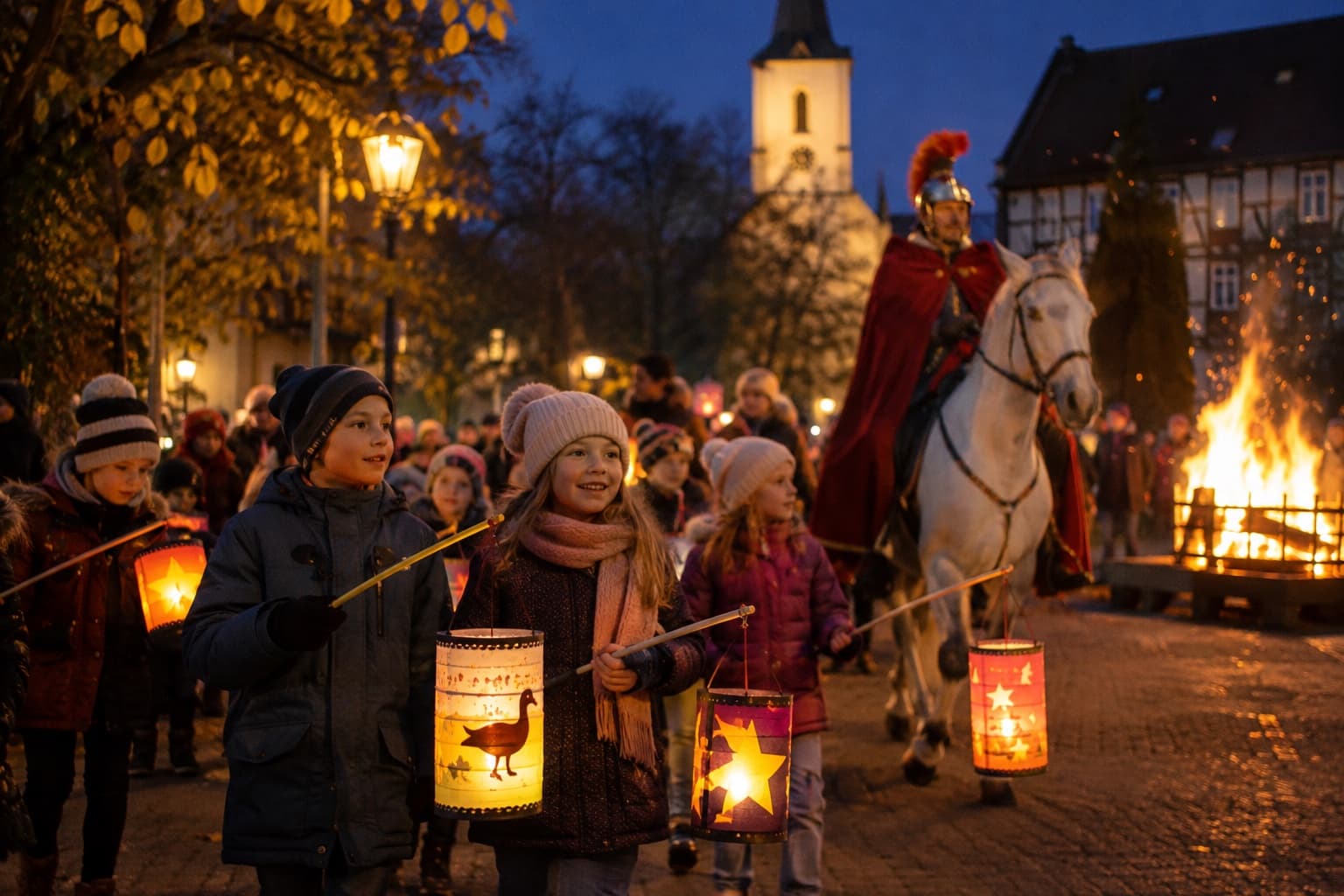
On St Martin's Day, children make their own lanterns, often at school or nursery. As night falls, they gather to take part in the famous "Laternenumzüge", lantern processions organised in neighbourhoods and villages.
Accompanied by traditional songs, and sometimes led by a rider on horseback portraying St Martin, these processions offer convivial moments that families particularly enjoy.
The lights moving through the streets also symbolise sharing and hope as the shortest days of the year draw near.
Martinsfeuer and Weckmann: the flavours of tradition
The celebration often continues around the "Martinsfeuer", the traditional St Martin's bonfire. Residents, children and families gather around the flames to share a warm moment together.
Another must: the "Weckmann", also known as "Stutenkerl" in some regions. This sweet bread shaped like a little figure, sometimes decorated with a clay pipe, is one of the treats associated with this time of year.
These culinary and festive traditions help make St Martin's Day an event deeply rooted in German popular culture.
November, between remembrance and tradition
The month of November is also marked by other important occasions in Germany.
On 1 November, All Saints' Day is observed in several Länder, particularly in regions with a Catholic tradition. Families visit cemeteries to lay flowers and tend the graves of their loved ones.
9 November also holds a special place in German history. The date recalls several major events, notably the fall of the Berlin Wall in 1989, but also Kristallnacht in 1938, a tragic episode of antisemitic persecution under the Nazi regime.
11 November also marks the start of the carnival season in several German regions, particularly in the Rhineland, with the traditional launch of the carnival season at 11:11 am.
Finally, as November goes on, the first preparations for Advent begin to appear. Christmas markets, Advent wreaths and festive lights gradually herald the arrival of the end-of-year celebrations.
A culture that crosses borders
In our Three Borders region, these traditions know no strict borders. Between French Moselle, German Saarland and Luxembourg, cultural practices intersect, are passed on and sometimes resemble one another.
St Martin's Day, the lantern processions and the November occasions bear witness to this rich shared culture.
Beyond the festivities and celebrations, these traditions remind us of the importance of preserving collective memory, passing stories on to new generations and maintaining ties between residents.
Because getting to know our neighbours' traditions also means better understanding our own history.